

By Denise Billen-Mejia, MD (retired), Consulting Hypnotist
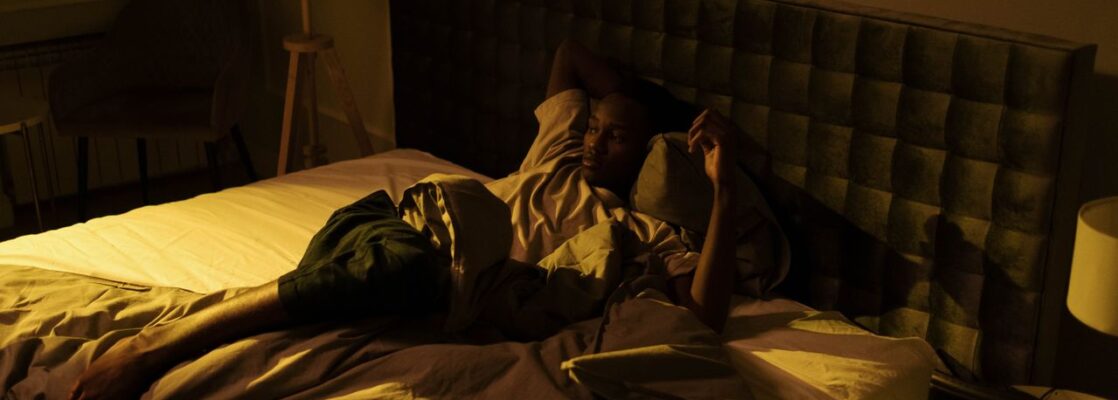
There is a particular kind of loneliness in being awake at three in the morning.
The house is quiet. The world is asleep. And your mind, apparently unaware of the hour, has decided this is the ideal moment to review every worry you own — tomorrow’s meeting, last month’s conversation, a health niggle, the state of the world in general.
If this sounds familiar, you are in enormous company. Difficulty sleeping is one of the most common complaints in any doctor’s office, and anxiety is its most faithful companion. In my practice, the two arrive together so often that I’ve come to think of them as a double act.
Here is why. Anxiety and poor sleep feed one another in a remarkably tidy loop. An anxious mind resists switching off, so sleep comes late or breaks apart in the small hours. Then the sleep deprivation itself makes the brain’s emotional centres more reactive the next day — this is measurable in a laboratory, not merely a feeling — so ordinary concerns loom larger. Which, of course, makes the following night worse.
Nobody chooses this night shift. But an awful lot of people are working it.
During my years in emergency medicine, I saw the daytime consequences constantly: exhaustion, poor concentration, a shortened fuse, and often a genuine fear that something was seriously wrong. Usually, what was wrong was simpler and kinder than people feared — a nervous system stuck in high alert, and a sleep pattern that had collapsed under it.
The good news, and there is genuinely good news, is that this loop can be interrupted. And one of the better-evidenced ways of interrupting it is hypnosis.
I know what some readers are thinking, so let me deal with it directly: no swinging watches, no clucking like a chicken, no surrendering your will to anybody. Clinical hypnosis is simply a state of deep, focused relaxation in which the mind becomes more open to helpful suggestion. You remain aware throughout. If the fire alarm went off, you’d get up and leave — probably more calmly than usual.
The evidence is worth knowing about. In 2019, the International Journal of Clinical and Experimental Hypnosis published a meta-analysis of fifteen controlled trials of hypnosis for anxiety (Valentine and colleagues). The average person receiving hypnosis reduced their anxiety more than roughly seventy-nine percent of those in control groups — and the benefit was larger still at follow-up, which suggests people keep the skill rather than losing it when sessions end.
On the sleep side, a 2014 study in the journal Sleep (Cordi and colleagues) found that a hypnotic suggestion played before a nap increased deep, slow-wave sleep — the kind that actually restores you — by around eighty percent in suggestible participants. And this wasn’t people simply saying they felt more rested; it was measured on brain monitoring. That last point matters. Sleeping tablets have their place, but nobody has ever been groggy the next morning from too much relaxation.
I see this in my own practice constantly — though rarely as the headline. Clients come to me for all manner of things: fears, habits, confidence. And almost without fail, somewhere in the second conversation, they mention — usually in passing — that they’re sleeping much better. Nobody asked for it; it simply arrived. Sleep is so entwined with the state of the nervous system that when the background noise settles, the nights tend to mend themselves. It may be the most common improvement I see, and the least remarked upon.
What does the work actually involve? Rather than walk you through a textbook, let me take you inside a session. We begin by talking — worry is surprisingly personal, and I want to know your particular variety. Then I guide you into that focused, restful state, and we give your mind two things it has been missing: a genuine, felt experience of calm, and a way back to it that you can use on your own. Most clients learn self-hypnosis. My aim, always, is to make myself redundant.
One caution, because I always give one. If your sleep problems are severe, or you snore heavily and wake unrefreshed, please see your doctor — some conditions, such as sleep apnoea, need medical investigation. Hypnosis works alongside good medical care, never instead of it.
But if your problem is the one so many of us know — a tired body and a mind that simply will not clock off — then take heart. Sleep is not a skill you’ve lost. It’s a capacity that has been buried under noise, and it can be uncovered again.
The night shift can end. You just have to hand in your notice.
If you would like to talk through any of this, my contact details are below.
Denise Billen-Mejia, MD (retired), is a consulting hypnotist working with clients worldwide via Zoom. www.healandberadiant.com
Dr. Denise Billen-Mejia is a former emergency medicine physician turned clinical hypnotist, dedicated to helping people find relief that conventional medicine alone hasn’t been able to provide.
To explore further, find articles and resources, or get in touch with Denise directl email office@aahypnosis.com or visit her website: healandberadiant.com
For more great health and lifestyle content, see here.
Explore more insights at https://dailybusinessjournal.com/.